
Filippo probably had little idea that the
drawing would earn him his freedom, but something drove him to produce it all
the same. Perhaps he had some notion
that by flattering his subject he might make his own life a little easier. He had been a compulsive scribbler since the
age of eight. That is why when the Prior of
the Carmelite Convent where he was educated, found that little Filippo had drawn all over his prayer book, he turned him over to a drawing
master. Now, with things at their worst,
Filippo Lippi simply turned to what he knew best.
What’s certain is that we cannot ascribe to Filippo, at that time, the popular view of the artist as concupiscent, tormented genius churning out expensive artefacts for the privileged few. And I doubt very much that his master had any thoughts about preserving the drawing or dismantling the white-washed wall and selling it. As an investment then, it would have been worthless, but by granting him his freedom, Filippo’s owner made a direct investment in the life of the artist himself. The whole of Filippo Lippi’s life’s-work sprang from that moment, when the master of slaves gazed at his portrait and recognised in it more than his own face.
What would you rather be? A professional who does it for money or an amateur who does it for love?
Many of us, like Fillippo Lippi, simply feel
compelled to do it. But why? Are we day-dreaming? Merely doodling our time away? Do we mind at all if all we create fulfils
its destiny in the dusty space under the bed?
If that’s so, is painting for us just an elaborate form of therapy?
Good paintings, though, seem to work on several
other levels too.
Firstly, the colours and marks alone may engage
us with their vivacity in the same abstract way as music can.
Secondly, there is the story that the artist is
attempting to tell. It may sound banal
but every picture does tell a
story.

When Monet paints a landscape, for example, he
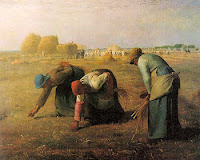
might be telling you a story about the passing of time; when Millet paints a
landscape, that story might be about the life of the French peasant; when
Van Gogh paints his landscape, it could well be the story of his own mental
disintegration.

Thirdly and most importantly, every painting needs a viewer, just as every piece of music needs a listener or it might as well never exist.


Thirdly and most importantly, every painting needs a viewer, just as every piece of music needs a listener or it might as well never exist.
And what happens in the mind of the viewer can
be utterly magical.
Think of the Moorish slave master.
Be aware of the power of Art in the minds of
others.
And draw and paint, if you feel so compelled,
but do it like Filippo, as if your freedom
depended upon it.


