Tuesday, 19 July 2011

Bottling Your Painting Holiday - Part 1


When I began teaching on painting holidays, my preoccupation, quite naturally was with the imparting of technique. I took it as a given that our novel surroundings would be uppermost on students' minds and that the main object of a week abroad would be how to depict the trees, the mountains, the rooftops, the locals; you name it, to a foreigner, even a doorknob can look fascinating.


Painting holiday students are acquisitive creatures, as devoted to the idea of making everything subject to their paintbrush as the most avid Japanese tourist with a camera.

At Chateau L'Age Baston, even before they've unpacked their suitcases, students' eyes are alighting on the geraniums in pots by the Guardian House, the well in the courtyard, the pigeonierre with its pagoda roof, the ivy around the pantry door, the big gates to the walnut orchard and Napoleon and Picasso, the baudet donkeys. But while a serious study of any of these subjects is valuable, not a single one of them makes a picture.

The strangeness of our surroundings can put our acquisitiveness into over-drive. Everything that flits into view must be netted, put in a jam jar and logged. It's what our sketchbooks are for, after all. But I've acquired the pigeonierre ten times over and the geraniums and the well. My I-Spy collection of L'Age Baston artefacts may be complete but I'm not necessarily any nearer to creating a single work of art.

Something else happens on a painting holiday. Amateur artists who only snatch a couple of hours a week to paint (if they're lucky) find themselves with time on their hands. They sit in the garden under the walnut trees, with the morning sun upon their faces and all the ideas they thought they had evaporate like yesterday's dreams. The little sable brush they couldn't wait to pick up begins to feel as unwieldy as a tree trunk and the lunch bell dangles mutely outside the kitchen door. Time to ourselves, you see, also means time with ourselves. There are no distractions now. For the first time in years, perhaps, we are alone with our wishes, but what exactly are they? The colours glow brightly and the paper is waiting.

So these days, I place more emphasis on what motivates us and the sleight of hand, or trick of the mind, that turns a picture into a work of art.


There is, as far as I know, only one way to jump out of an aeroplane. It cannot be done by degrees. You are either trembling on the threshold, with several cubic tonnes of air rushing by you and the ground, a hazy notion at your feet or you are falling - or is it flying? And so, the artist must take a leap too. The white paper is a void as big as the sky. Choose the brightest, boldest colour in your paintbox. And just as the skydiver has no choice but to let the air carry him or her where it will, so you let the colour lead you across the paper. It may not be the shape that is in front of you, but it will be your shape. Do not be too ambitious. No need for somersaults. It's enough that you have at last, jumped.


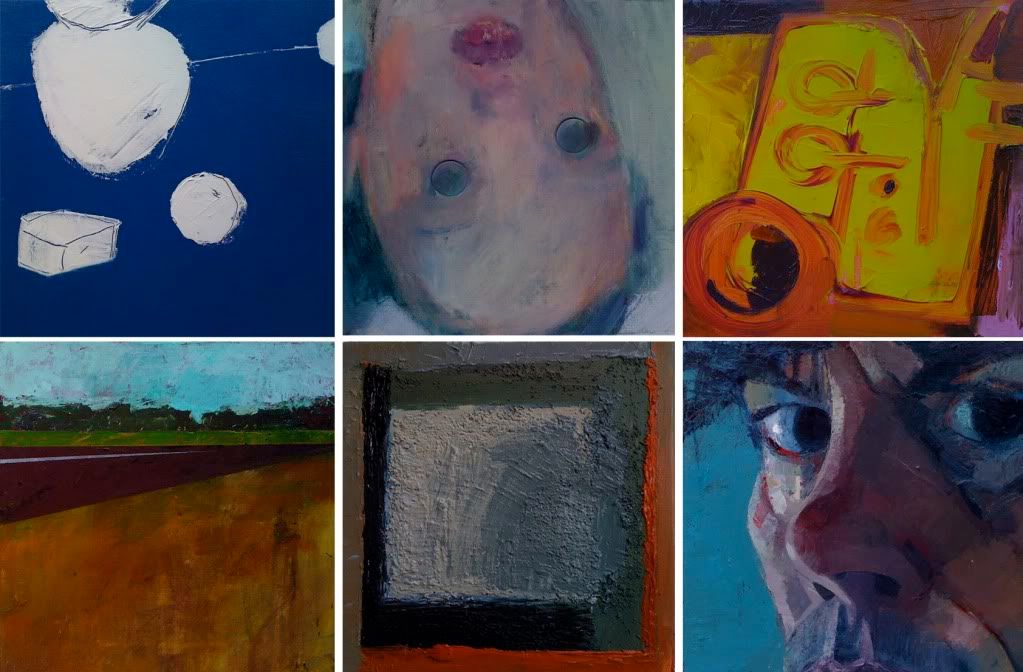
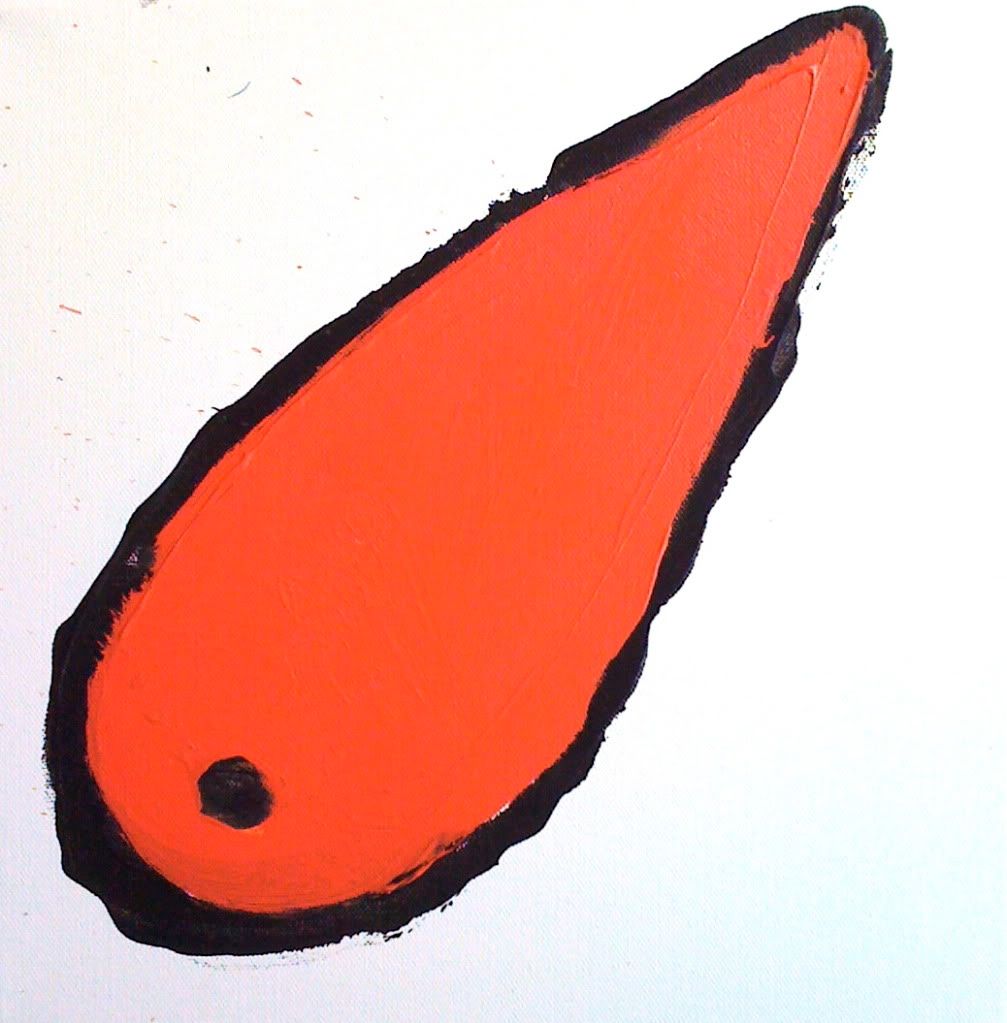
These are examples of Day One exercises at L'Age Baston. Students were asked to choose no more than three colours and to put paint directly onto the paper without any preliminary drawing. The only other rules were 1) to ensure every colour shape related to the one next to it as well as to the boundaries of the picture itself and 2) to leave a narrow gap between different colours. This would ensure that our pictures would be as bright as possible. Unnatural and inaccurate, they may be, but we had all stopped collecting things and instead of bottling the world, we had begun to add to it.


Isn't that what being creative is all about?

Tuesday, 12 April 2011

The Grammar Of Drawing Part 2

From the Oxford English Dictionary, to draw also means to pull, to extract, to take in and to disembowel.

When I uploaded these drawings to a Facebook album, they provoked a flurry of responses, from downright indignation to outright enthusiasm. Perhaps they could spark so much in people's minds because they were of so little; a few random scribbles that hinted at forms and suggested narratives but ultimately refused to reveal their hidden message. There was no message, of course and those who require some kind of polemic from their art felt cheated, while others who are happy with mysteries and unanswerable questions, felt liberated.

The drawings were made by five students who attended my Grammar Of Drawing course at Dillington House (see the previous post). Standing in a circle at their easels, I asked them to draw me in long, flowing lines that filled the paper as I moved about the studio. After a few marks were made, they were required to pause, then move in an anti-clockwise direction to the next easel, where they picked up the drawing tool that had been left by the previous student and continue drawing.

My intention was to acquaint my students with the physicality of drawing. It is not like writing a cheque; something to be done with the fingers and wrists, alone, but with the whole body. If a singer can produce their voice from below the diaphragm, why can not an artist draw with his or her entire being? A singer may make us fully aware of the quality of their voice, without having to frame a single word. Is it necessary, then, for the artist to draw a pot, or a person or a pomegranate before we take any notice of the kind of mark they are making?


The first drawing tells you something about how well I can draw pots, but seems to stop right there. This is drawing, simply as a means of transferring data from one medium to another. The second drawing hints at something more elusive. We study the line in its quest to give form; we see ebb and flow and the traces of movement, at times hesitant, at others, sure. It may not tell you much about pots but it is quite eloquent about what it means to confront the void, to hold onto that charcoal and draw.

Friday, 28 January 2011

The Grammar of Drawing at Dillington House

This course seeks to re-establish the centrality of drawing to art practise. Using everyday objects and the landscape around us, we will learn how to measure and to accurately depict our world.

We will learn which marks to use when we wish to evoke light and shade, for example, or when we wish to create texture or movement. 


We will learn how to create spatial depth using the rules of perspective and discover what is meant by chiaroscuro and nōtan. 

We will come to understand the difference between line and tone, and study the fine difference between reality and abstraction.  


But we will also play, for in play, we may discover how drawing can help us to create a language that is uniquely our own.  No previous art experience is necessary, only an enthusiastic an open mind.
The Grammar of Drawing is a four day residential course in a superb country house setting and runs from 21 February to 25 February 2011. 

For more information visit www.dillington.com


Monday, 17 January 2011

Beauty In The Eye Of The Beholder?


Pick any object. The chances are, the longer you look at it, the more interesting it will become. Drawing and painting help to focus the attention and coax the mind into seeing the beauty that is always present. Beauty, however, is not an attribute of the object in view and to say that beauty is in the eye of the beholder, is merely to suggest that everyone's appreciation of beauty is different (I think sprouts are beautiful, but you might not). Rather say, beauty is in the mind of the beholder; the result of deep understanding, when one at last becomes intimate and fully acquainted with one's subject.

Monday, 6 December 2010

Talking To My Wall


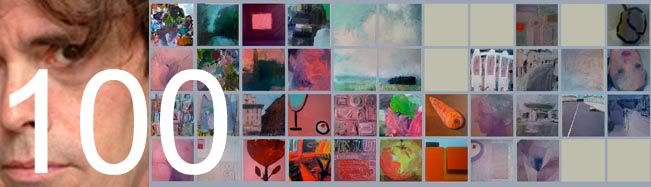
A few days before Image Wall opened, Ciara Nolan came into the gallery to hang the show for me and we had a discussion about how she intended to arrange one hundred, very different canvases:


SEEING THINGS: my new series of programmes about the visual arts in and around Frome.

Go to Programmes > Talk > Seeing Things.


Friday, 12 November 2010

Image Wall - The Exhibition


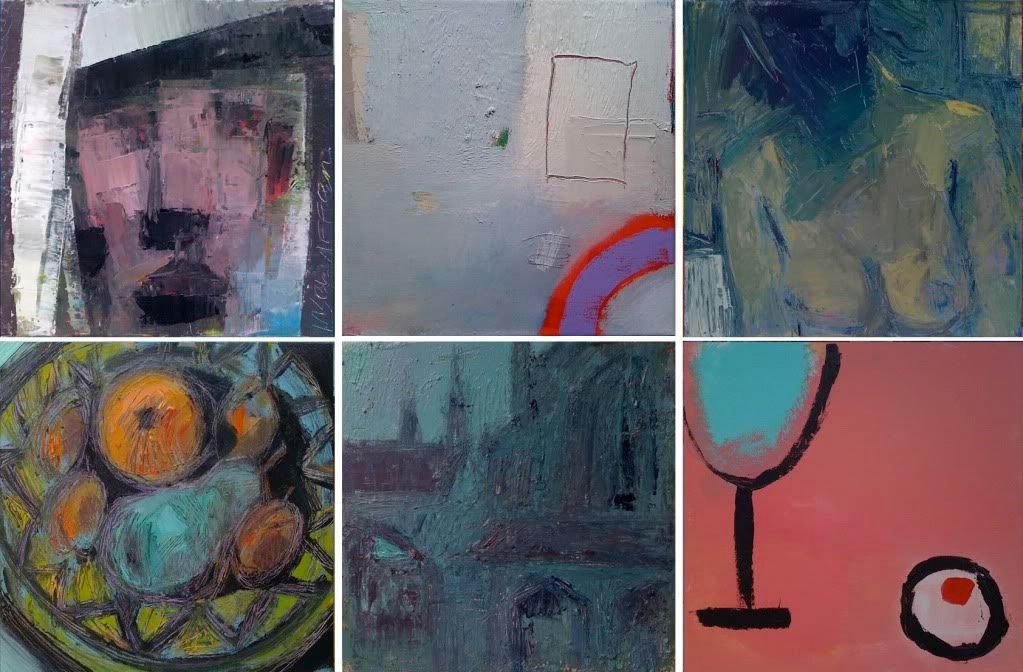
At the beginning of the year, I was invited by Black Swan Arts in Frome to stage an exhibition in their Round Tower Gallery, a unique stone-walled, circular space, that was originally built in the eighteenth for drying fabric. I knew instantly that I did not want the show to be a predictable resumé of all the work I’d done so far. Rather, I found it more appealing to imagine how the gallery would look if it were filled with bright, shiny new paintings, in a medium I was unfamiliar with. And then I took the idea a stage further. A dozen new paintings, I could imagine that easily, but what about one hundred? If I worked solidly from May to November, painting abstracts, still-life, portraits, landscapes and everything in between, what would my one hundredth painting look like? And what kind of painter would I have become?
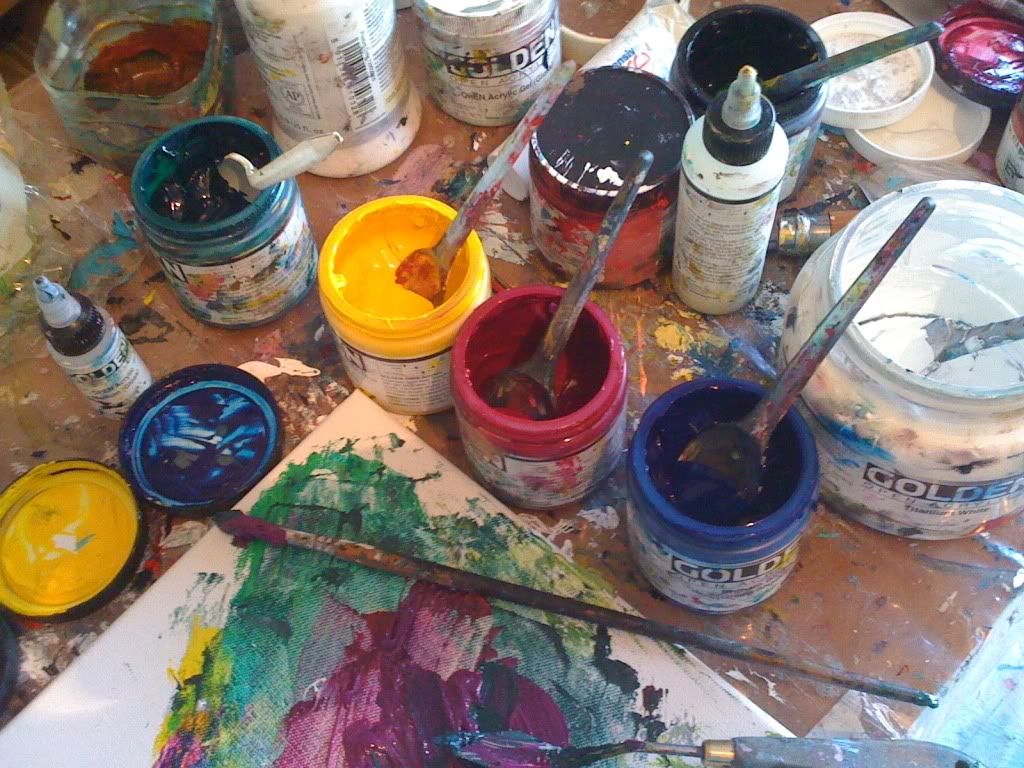
I chose six slow-drying acrylic colours (including black and white), I bought pots of moulding paste and pumice gel and ordered one hundred canvases. Each one was to be just 30 x 30 cm square, about the size of a vinyl album sleeve.
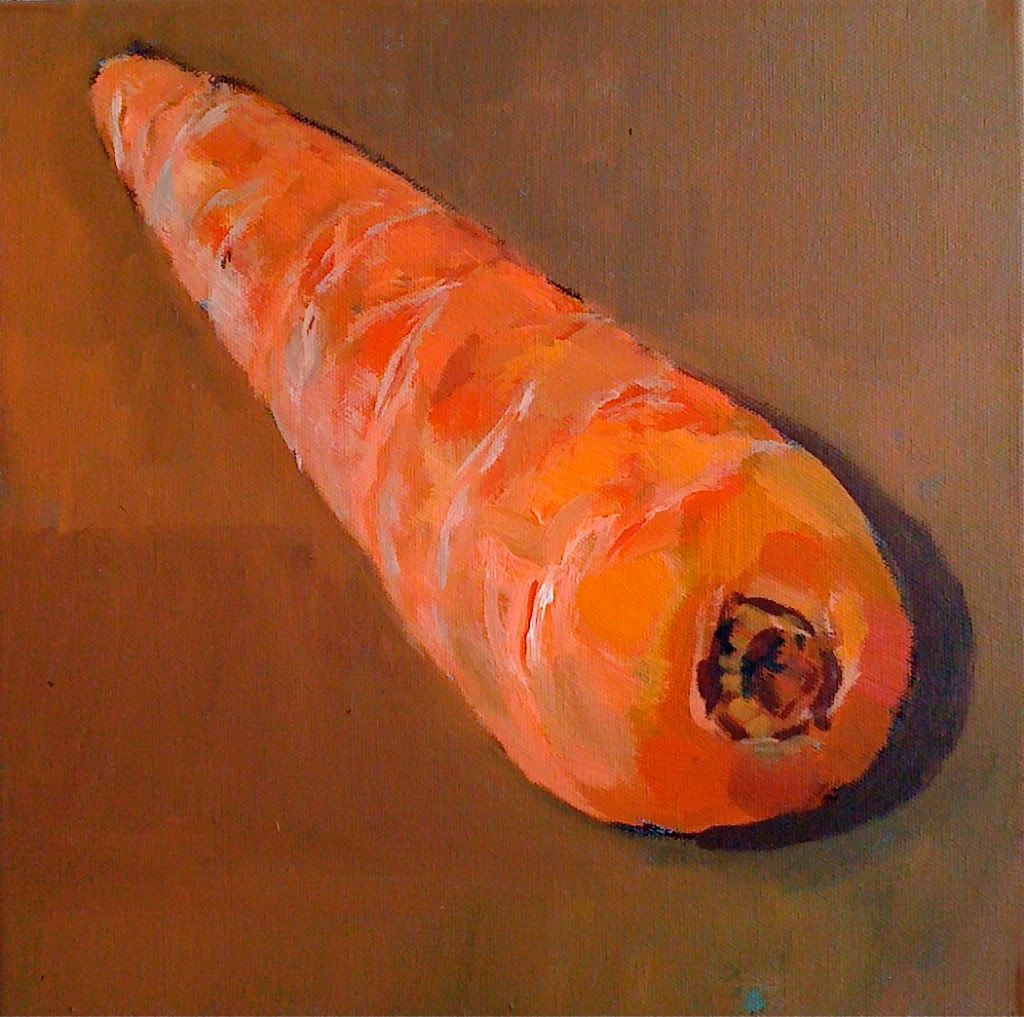
I painted my first picture in early May:
Thinking of carrots and sticks and Cezanne’s words:
“The day is coming when a single carrot, freshly observed, will set off a revolution.”
The revolution did not come, so I painted another carrot and then I hit a snag, in the form of painting holidays and nine weeks in France and Italy.
It was quite a nice problem to have; I worked with so many wonderful people, both at l’Age Baston and Studio Paradiso, but it meant that on my return, if I was to meet my November deadline, I would have to paint at the rate of one and a half pictures per day.
I thought of Turner and the twenty-four thousand watercolours he painted in his lifetime. And I thought of Van Gogh and the eighty masterpieces he produced during the eight months he spent in Arles with Gaugin.
“Inspiration is born of hard work and not the other way around,” said Stanislavski.
If you’re curious to know what the one hundredth painting looks like:
IMAGE WALL
A personal journey in 100 canvases, painted between May and November 2010 
The Round Tower Gallery
2 Bridge Street
Frome
Somerset BA11 1BB
Tel: 01373 473 980
27 November to 24 December (please visit Black Swan Arts website for opening times).

And if Frome is simply too far away, I’ll post the image soon on http://theimagewall.blogspot.com
“This is my way of holding onto things. Friction against the slippery slope of modernity; smooth as a flat screen TV, you can touch but not feel. Painting slows us down, but makes us more alive; opens a window on a world full of possibilities and entirely free of interruptions from our sponsor. Jawlensky described art as nostalgia for God. It's taken me 100 canvases to understand what that meant.
Painting and longing are one and the same.”
Chandler 2010

Saturday, 18 September 2010

A Grey And White Matter


To be creative, I'm told, our brains need a goodly amount of low integrity white matter. Grey matter is good for rational, logical thinking but it tends to hold onto concepts too rigidly to create eureka moments. Those serendipitous conjunctions of true genius are caused by the white stuff, leaking ideas all over the cerebral cortex. 


The tendency amongst my students is to approach each painting with their grey matter. They have a concept in their minds of the desired outcome and they see the act of painting as a kind of test of their ability to achieve it. I, on the other hand, am more excited about the white matter; about the possibility that something unexpected may occur; something outside my usual repertoire. The business of painting is ideal for this kind of enterprise. It begins the moment you mix one colour with another and ask the question, 'what if...?' 


Even if there is nothing intrinsically new in art (or the universe) there are still an infinite number of untried, untested combinations for us to get excited about.